Growing Up Wild on an African Safari
There are places you visit, and there are places that literally rearrange the furniture inside your head.
Africa does not politely introduce itself. It arrives in scale, in silence, in colour, in sound that travels miles before you understand where it came from. For a young traveller, especially one standing on the edge of adulthood, it is less a destination than a recalibration of what the world actually is.
A safari is not really about animals. Not at first. The animals come later, once the mind has caught up with distance. The real moment happens earlier, the instant a teenager realises the horizon is not a backdrop but a measurable, physical thing. You can see weather forming. You can see light move across land. You can see how small a human is when nothing interrupts the view for kilometres.
And that changes something important.
The Age Where Perspective Lands
Sixteen and seventeen sit in a strange space between childhood certainty and adult complexity. It’s an age of opinions formed from classrooms, social feeds and second‑hand knowledge. Most of the world arrives filtered and flattened. Landscapes become wallpapers. Cultures become headlines.
Africa breaks that illusion immediately.
The first morning on safari rarely starts with drama. It begins with cold air and a quiet you can feel in your chest. The sun lifts slowly and, instead of revealing a scene, it reveals distance. Trees are not grouped decoratively. They are spaced by survival. Movement at the edge of vision matters. Time stretches because nothing here operates on urgency except life itself.
Teenagers notice things adults have trained themselves to ignore. Tracks in dust. The smell of heat before heat arrives. The way everyone instinctively whispers even when there’s no rule requiring it.
The wildlife sightings become extraordinary because the waiting makes them earned.
Shared Experience, Not Scheduled Entertainment
This is why safaris work so powerfully for families with older children. There is no entertainment programme. No carefully curated distraction. Instead there is participation, the act of existing together somewhere new, without routine acting as a buffer.
Overland travel especially creates a different rhythm. You travel with strangers who quickly stop being strangers. You help build temporary homes each evening. You cook, pack, move, and repeat. By the third day the group feels less like travellers and more like a small, mobile village learning cooperation by necessity rather than design.
Acacia Africa has recognised that teenagers are exactly the right age to experience this dynamic. The company has lowered its minimum age requirement, now welcoming families with 16‑ and 17‑year‑olds on its Adventure Camping and Adventure Accommodated Tours, opening access to all 81 itineraries across Southern and East Africa.
Arno Delport, Sales & Marketing Manager at Acacia Africa, explains the emotional pull behind the change: “We’re seeing more and more past overlanders coming back to book our Small Group Safaris, but being able to relive the overland experience and revisit the same destinations with their teens in tow will be a real full‑circle moment.”
It is a simple idea, but a profound one. The same road experienced twice, by two generations standing at different starting points in life.
The Moment Wildlife Stops Being Documentary
Most teenagers arrive in Africa with familiarity. They’ve seen lions in high definition, elephants in slow motion, migrations from aerial cameras. They know what they’re supposed to feel.
But watching wildlife through glass is knowledge. Watching it through space is understanding.
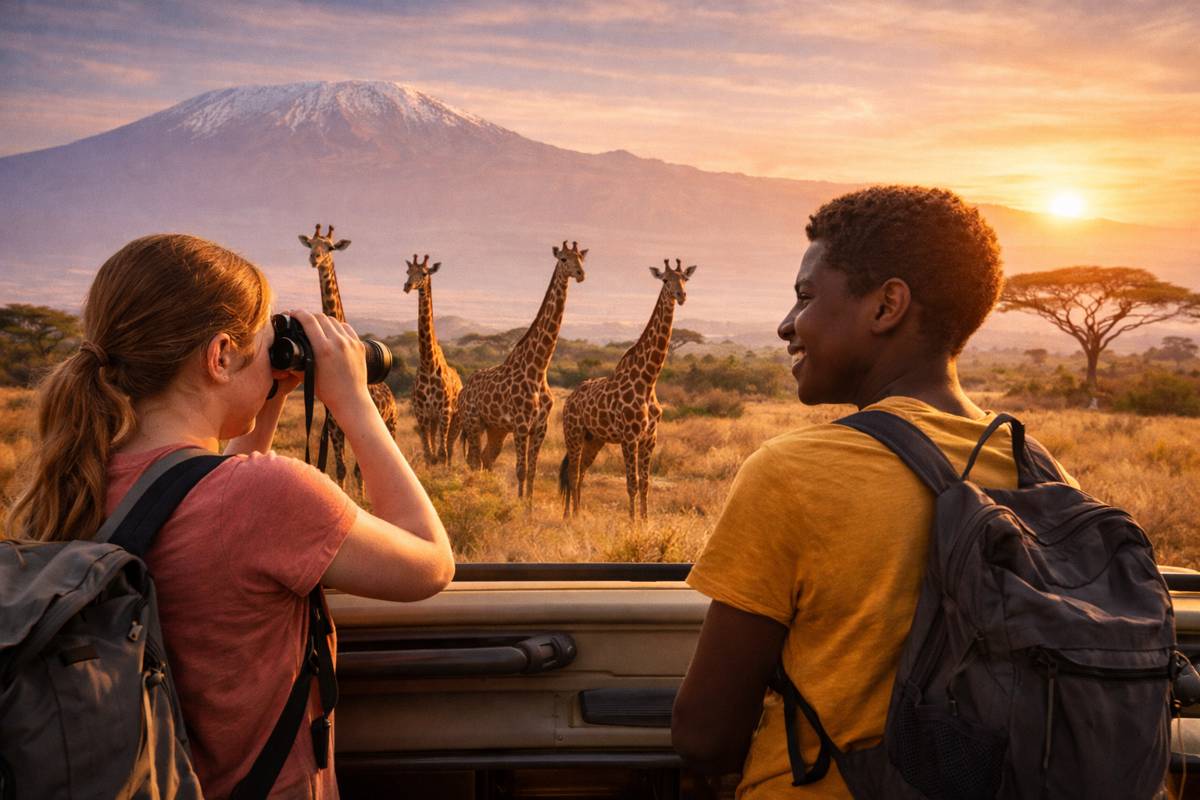
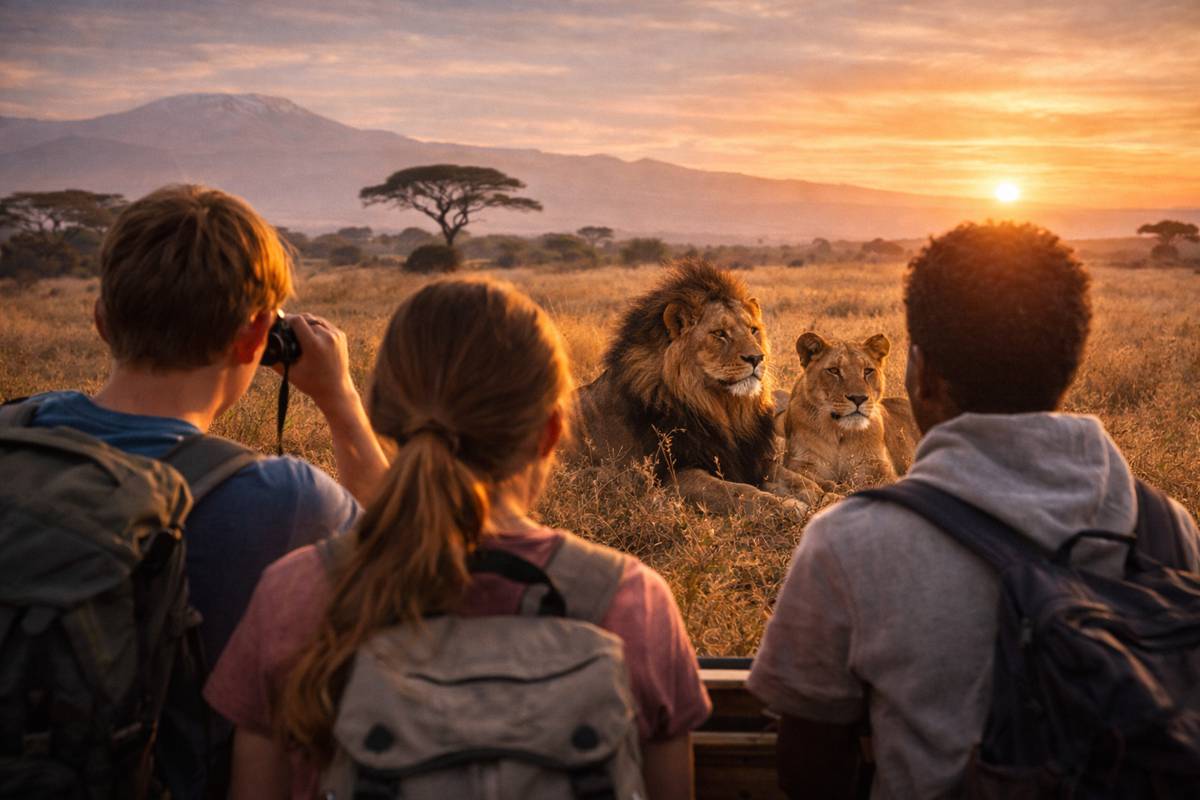
An elephant crossing a road forces patience because the road is no longer yours. A giraffe moving across dawn light looks impossibly slow yet covers ground effortlessly. A lion’s presence is not cinematic, it is spatial. You feel where it is before you see it.
Nothing is narrated. No background music explains significance. The brain writes its own commentary, and that commentary stays longer than any recorded memory.
Teenagers rarely describe the first sighting as exciting. They describe it as strange, huge, quiet, unreal. Excitement comes later, once they understand what they just experienced.
Landscapes That Teach Scale
On long overland routes the lesson deepens. Southern Africa shifts scenery like chapters in a book that refuses to stay in one genre. Coast becomes mountain. Mountain becomes desert. Desert becomes floodplain. Each transition rewrites assumptions about what a country should look like.
The journey from Cape Town northwards reveals this best. Urban energy fades into the Cederberg’s weathered rock. Namibia expands into the immense geology of Fish River Canyon and the sculpted dunes of Sossusvlei. Along the Atlantic coast in Swakopmund, ocean air interrupts desert heat before the route pushes inland again to Spitzkoppe and the wildlife expanses of Etosha National Park.
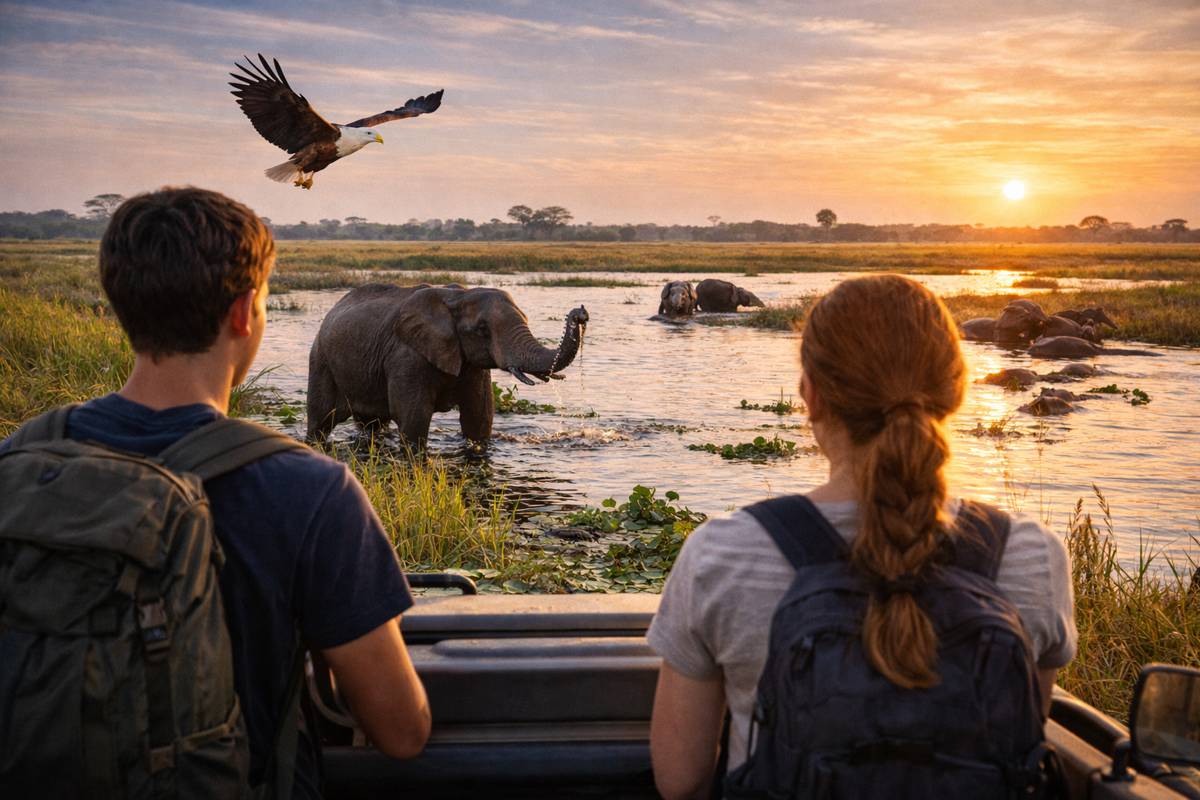
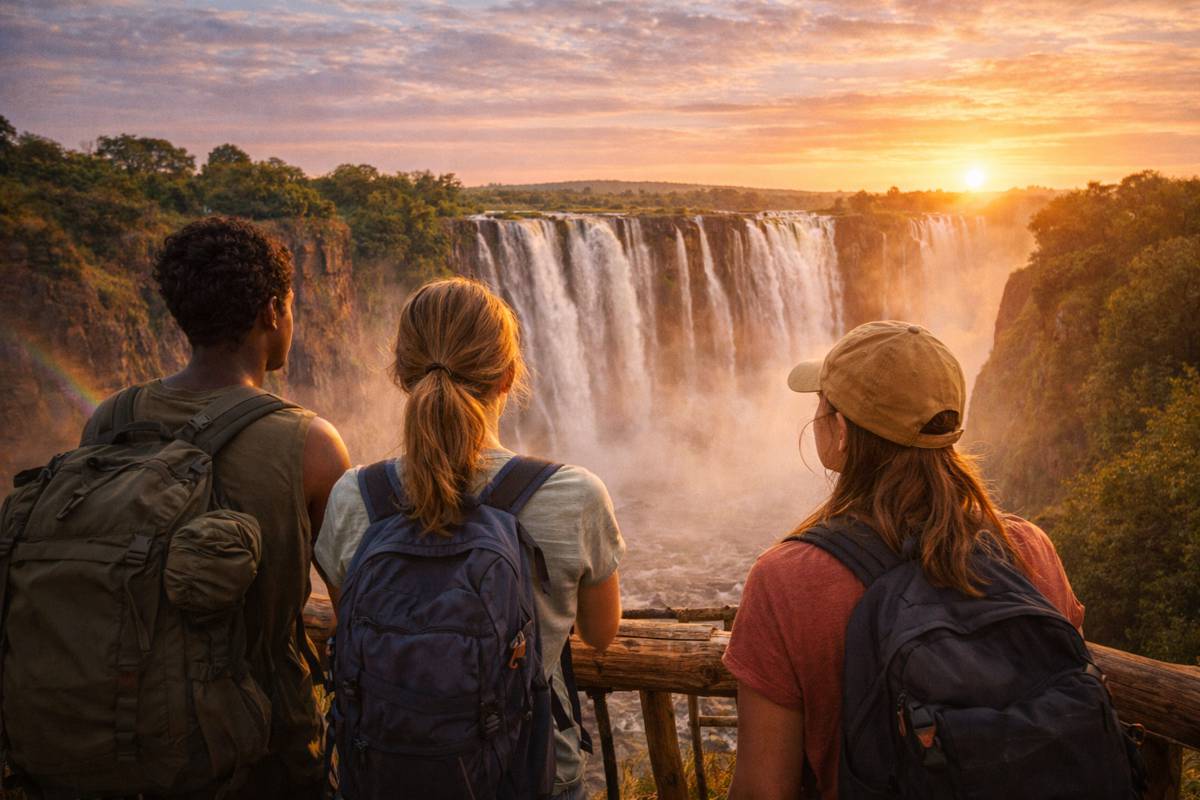
Further on, Botswana replaces dust with water. The Okavango Delta and the Chobe River change movement entirely, slow boats instead of trucks, reflections instead of horizons, elephants appearing between reeds rather than across plains. The journey ends at Victoria Falls near Livingstone, Zambia, where sound arrives long before sight and teenagers discover what the word “power” actually means when applied to nature.
Delport notes why these environments matter beyond sightseeing: “There’s a growing desire for meaningful shared experiences before kids leave for university or fly the nest. Africa delivers that in a powerful way. Its raw landscapes and unforgettable moments create space for real connection, whether it’s a first‑time visit or a return to familiar ground. For many repeat travellers, coming back to Africa feels less like a trip and more like a homecoming.”
Conversations That Only Happen on the Road
Something unexpected happens during long journeys across empty places. People talk. Not performatively, not in scheduled family time, but gradually. The absence of constant stimulation leaves room for curiosity to expand outward and inward at the same time.
Parents stop instructing and start remembering. Teenagers stop reacting and start asking. The environment does most of the work. Questions arise naturally: about history, about inequality, about conservation, about how people live differently in places without the infrastructure they take for granted.
Africa does not offer simple answers. It offers context. And context is a powerful educational tool because it refuses reduction.
Shared difficulty helps too. Windy campsites, early mornings, helping prepare meals, mild discomfort becomes collective achievement. These are small victories, but they accumulate into a story everyone present owns equally.
A Future Built on Experiences
A younger child enjoys a safari. An adult appreciates it. A teenager understands it at exactly the moment they begin forming a worldview that will likely stay with them for decades.
At sixteen or seventeen, experiences become reference points. The scale of Namibia’s desert alters perception of space. The coexistence of wildlife and rural communities challenges assumptions about land use. The visibility of both beauty and hardship complicates simplistic narratives about the world.
Travel here is not about ticking countries off a list. It becomes a benchmark, the place future experiences are compared against when judging authenticity, silence, or the meaning of distance.
Practical Realities
Acacia Africa operates scheduled departures year‑round and offers pre‑ and post‑tour services. Prices start from £645 per person plus Adventure Pass from £59 for a four‑day Kruger Safari. A 19‑day Cape Town to Victoria Falls Adventure Camping Tour begins from £2,585 per person plus Adventure Pass from £284, including transport, accommodation, most meals, and the services of a tour leader and driver, with accommodation varying between dome tents, dorms and a tented camp. Group size is limited to 18 travellers.
All prices exclude flights. Some southern African countries also require travellers under 18 to carry an unabridged birth certificate, with additional rules if not travelling with both parents listed. Practical details matter, but they are rarely what travellers remember.
Memories That Last
Years later, teenagers rarely recall the exact day of a sighting. Instead they remember a feeling: how big the sky looked, how quiet everyone became at dusk, how unfamiliar stars forced them to search for new constellations.
Africa becomes less a location than a mental landmark, the place where the world stopped feeling theoretical.
And perhaps that is why opening safaris to older teens matters. Not because they are now allowed to join, but because they are at precisely the age where they can understand what the continent offers: perspective, humility, and the thrilling awareness that the planet is far larger and more complex than the small circle most lives initially occupy.
A safari does not just show wildlife. It introduces scale. And scale, once understood, never leaves.